How to Choose Car Coaxial Speakers: A Complete Buying Guide
A hatchback owner spends a Sunday swapping the door speakers and ends the day with sound that's worse than before. Nothing was broken. The new pair just didn't suit the head unit or the door. Car coaxial speakers look simple on the shelf, yet small details decide how they sound once fitted, and Supreme India has put this guide together so you can check those details first.
What Are Car Coaxial Speakers?
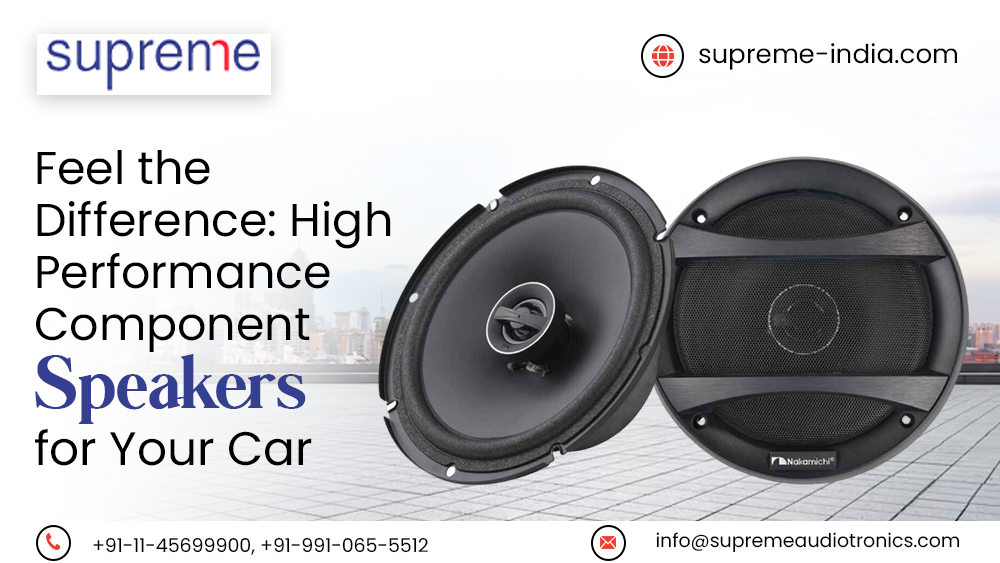
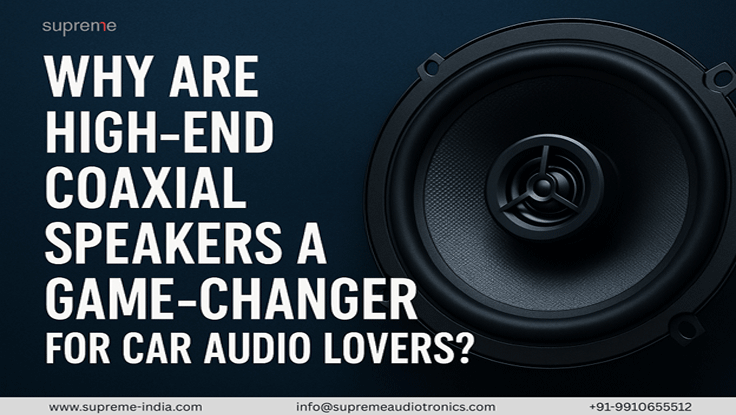
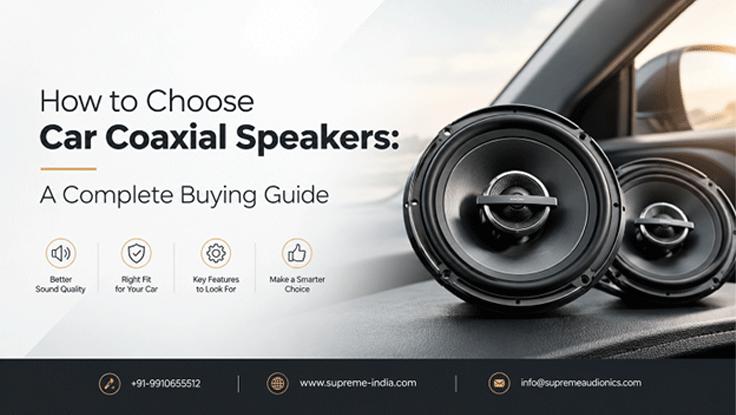
Car Coaxial speakers put the tweeter on the same axis as the woofer, usually at the centre of the cone, so the sound comes from one point. That's why they drop into the standard door or rear shelf cut-out. Sizes vary, but 6.5-inch round and 6x9-inch oval are the common ones. Measure your car before you look at anything else.
Why Choose Coaxial Speakers for Your Car?
Fitting is easy. The opening is already there, and the wiring stays simple. For a daily driver on a modest budget, coaxial speakers for car doors are a clear step up from paper-cone factory units.
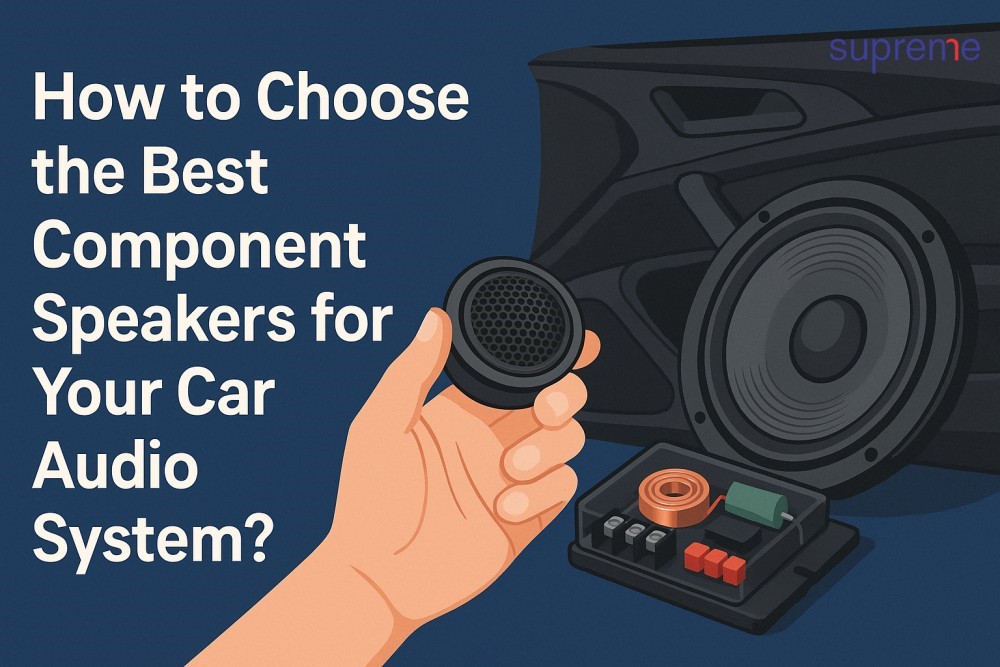
I've seen people spend an afternoon on a component set and lose half the benefit by putting the tweeter in the wrong spot. A good coaxial avoids that.
2-Way vs 3-Way Coaxial Speakers: Which Is Better?
A 2-way has a woofer and a tweeter. A 3-way adds a small extra driver for the highs. More drivers don't automatically sound better. I once heard a clean 2-way beat a cheap 3-way where the extra driver only added hiss. If the crossover is good and the build is solid, a 3-way can sound a little smoother at the top. Otherwise, pick a well-made 2-way and save the money.
How to Match Coaxial Speakers With Your Car Audio System
Start with power. Stock head units often give about 15 to 20 watts RMS per channel, so a speaker rated for 50 watts RMS won't be driven properly. Sensitivity helps here: 90 dB or higher gets more volume from low power. Check the impedance, usually 4 ohms.
Then mounting depth. A deep magnet can foul the window glass as it drops, and that's a miserable discovery after the door card is back on. If your car needs adapter plates, buy them with the speakers. Matching car coaxial speakers to your system takes ten minutes of checking and saves hours of refitting.
Common Mistakes to Avoid When Buying Car Coaxial Speakers
The usual one is chasing the peak watt figure on the box. It's a marketing number. RMS tells you what the speaker can actually handle. Another is ignoring the rear. A strong front pair with tired rear speakers sounds lopsided, so fit both pairs or match them.
Door panels rattle, too, and nobody budgets for it. A little sound-deadening on the door skin often improves the bass more than a pricier speaker would. Check polarity when you wire them. Reversed wires thin out the bass in a way that's hard to pin down.
Why Choose Supreme India for Car Coaxial Speakers?
Supreme India supplies car audio products, and its speakers are meant for the sizes and power levels most Indian cars use. When you're hunting for the best coaxial speakers for car use, ask for the RMS rating and sensitivity, then check the mounting depth against your door. Listen at normal volume, not just at full blast. A supplier who answers those questions quickly usually knows the product. Supreme India's team can also help you confirm fitment for your exact model before you buy.
FAQs
Speakers with the tweeter mounted on the same axis as the woofer, so the whole sound comes from one unit that drops into a standard opening.
Yes, for most daily drivers. The best coaxial speakers for car use are easy to fit and give clearer highs than paper-cone factory units.
Whatever fits your doors. 6.5-inch is common among coaxial speakers for car fronts, and 6x9-inch is common at the rear. Measure first.
A well-made 2-way often beats a cheap 3-way. Choose based on build quality and sensitivity, not the driver count.
Usually. Better materials and better sensitivity give clearer, louder sound, even on a stock head unit.